
Homeowners
Solar systems for UK homes
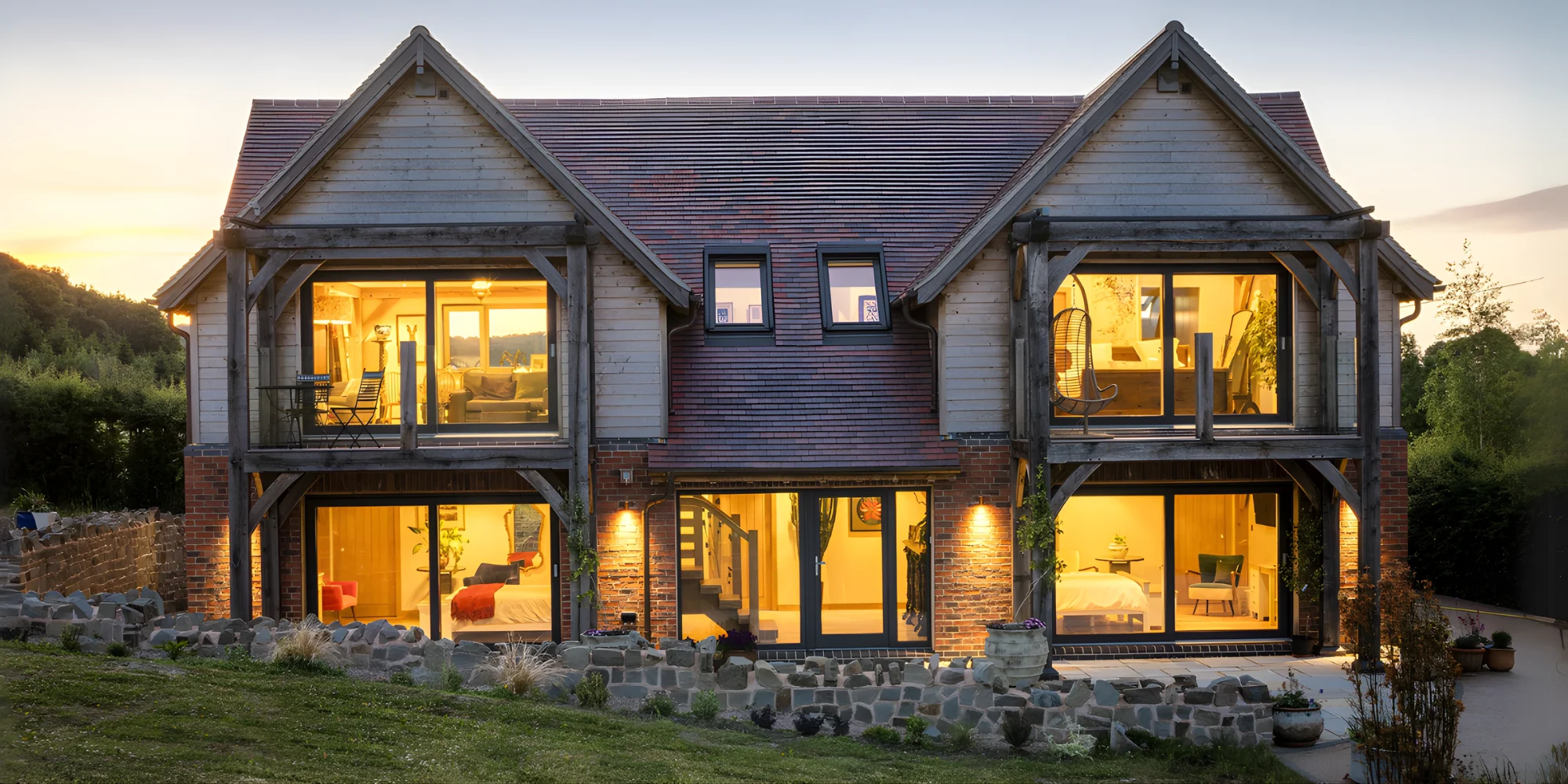
Local Solar Specialists Serving Hampshire & Surrounding Areas – Professional UK Installations, Local Knowledge
We know Hampshire's roofs, our variable southern weather, and local planning rules inside out – get your free site survey from people who live and work right here.
Request a Free Solar Quote
Hampshire’s Trusted Solar Installers
Choose Solar Panel Installation from a Trusted UK Specialist
Platinum Installer • 11+ Years Experience • 1,000s of Local Installations
Bespoke Solar PV & Battery Systems for Hampshire Homes & Businesses
Installed properly. Priced clearly. Supported long-term.
UK-Solar designs and installs high-performance solar systems across Hampshire for homeowners and businesses who want real bill savings, not sales fluff.
With over a decade of installs behind us, local engineers, and a dedicated Hampshire warehouse, we deliver solar systems built to perform — and support them long after installation.
Whether it’s a residential home or a commercial property, we provide:
accurate savings forecastshonest, no-pressure advicepremium components installed to last
All backed by strong aftercare and both local and national support networks.
Rated by Hampshire Homeowners
Platinum Solar Installer • 11+ Years Experience • 1,000s of Local Installations • Local Engineers & Aftercare
Platinum Solar Installer • 11+ Years Experience • 1,000s of Local Installations • Local Engineers & Aftercare
Go Green
Tell us about your home and your vision to get started. We'll use your details to prepare a fast, initial estimate tailored to your transformation goals - zero commitment required.
Learn moreWho we serve
Whether you’re a homeowner, business, or landlord, UK-Solar designs and installs tailored solar solutions that maximise energy savings and reduce reliance on traditional energy suppliers.
How Solar Works
Solar PV panels convert sunlight into electricity for your home. Any unused energy can be stored in batteries or exported back to the grid under the UK Smart Export Guarantee.
Most systems generate power even on cloudy days and require minimal maintenance. I personally would just take their content for this and just change to UK-Solar.
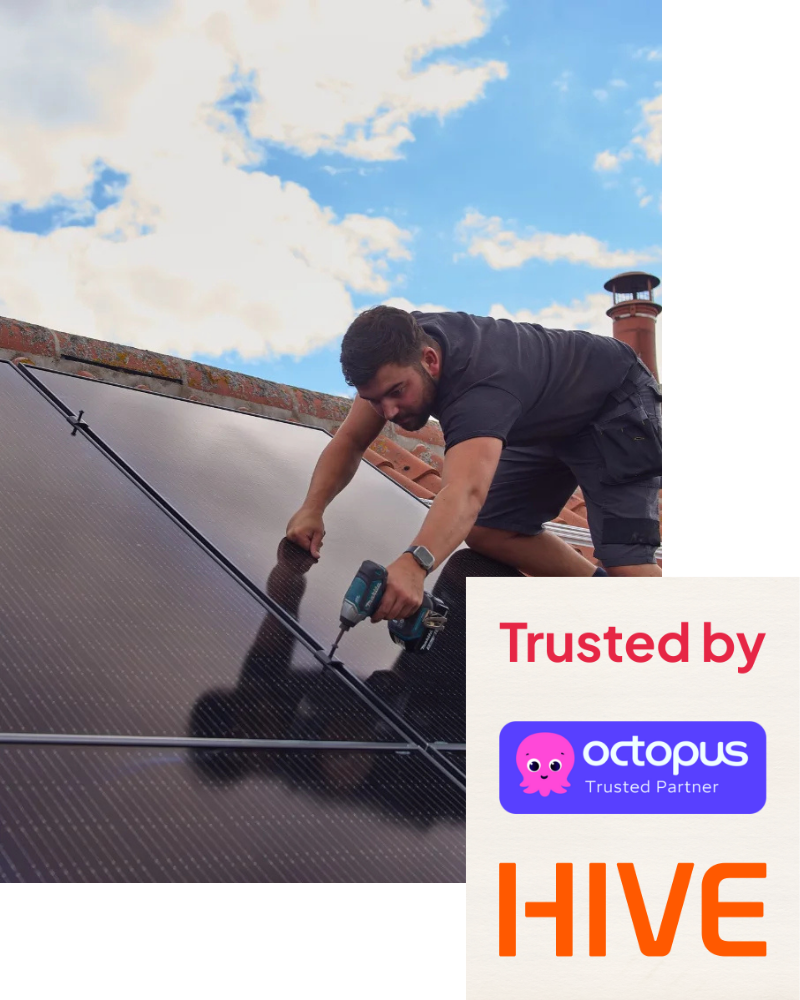
But how does that actually happen?
1. Capturing Daylight
Each panel is made up of layers of specially treated silicon. When sunlight hits these layers, tiny particles of light (called photons) knock electrons loose inside the silicon. This creates a flow of electricity – a process known as the photovoltaic effect.
2. From Panels to Power
The electricity generated by the panels is direct current (DC). Homes use alternating current (AC), so this needs to be converted. That’s where an inverter comes in – it changes the DC into usable AC electricity to power your appliances.
3. Smarter Systems
Modern solar systems are smarter than ever. Some include optimisers or micro-inverters that allow each panel to perform at its best, even if part of your roof is shaded. These technologies make the most of every bit of daylight.
4. What Happens to the Electricity?
You can use the solar electricity as it’s generated. If you’re producing more than you need, the surplus can be:
-
Sent back to the grid (you may get paid for this),with Solar Grid Trading
-
Stored in a solar battery, ready to use when the sun isn’t shining – like in the evening or on cloudy days.
At UK Solar, we design systems that help many of our customers cover up to 90% of their energy needs from solar and battery storage.
5. Designed For Your Home
Every home is different. That’s why we don’t just install off-the-shelf systems. We look at your roof shape, angle, shading and how your household uses electricity through 3D Solar PV modelling. Then we design a home solar solution that’s tailored to you – with clear, independent advice at every step.
Ready to start your project?
Tell us about your home and your vision to get started. We'll use your details to prepare a fast, initial estimate tailored to your transformation goals - zero commitment required.
Learn moreBenefits of going solar
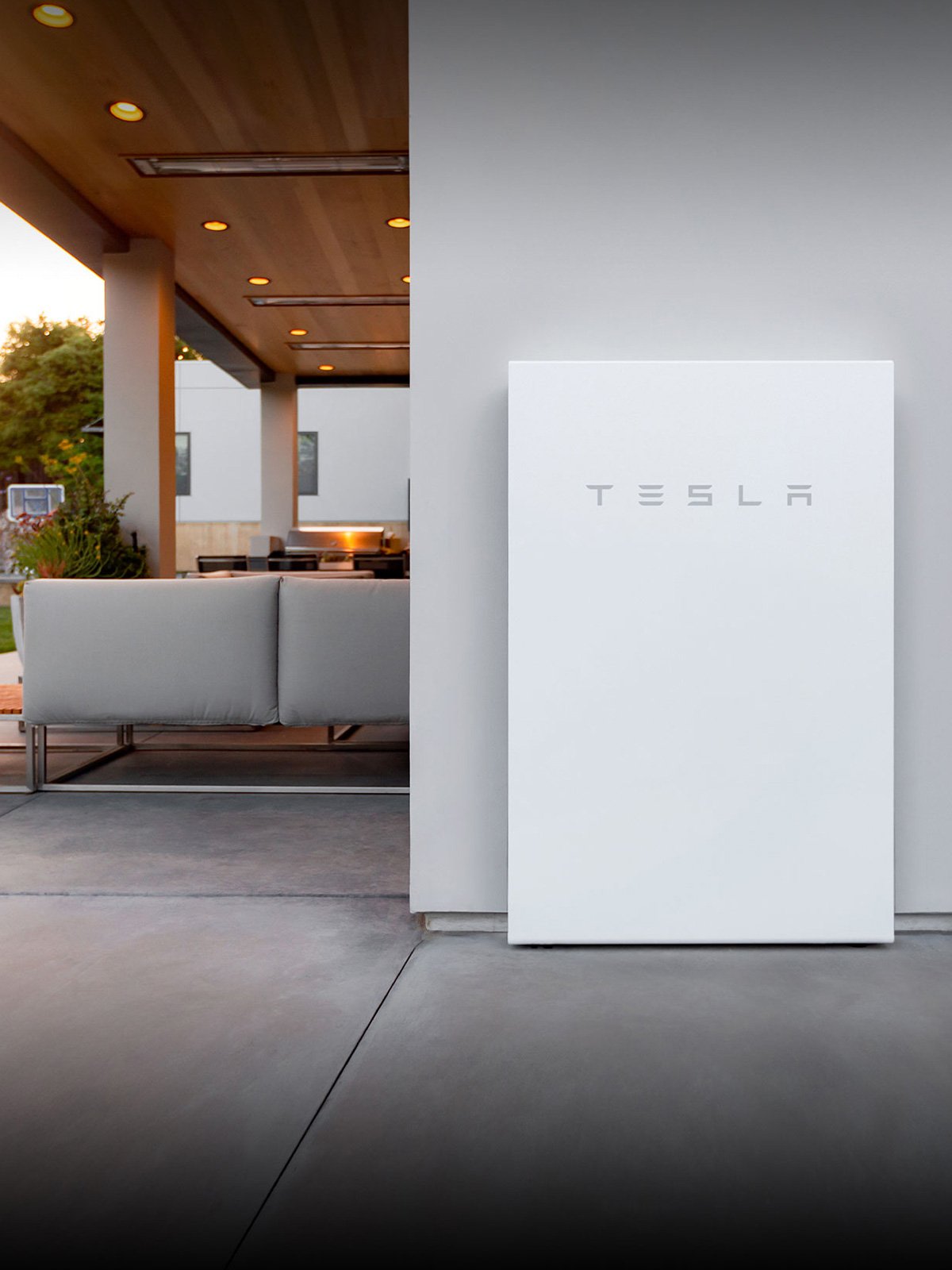
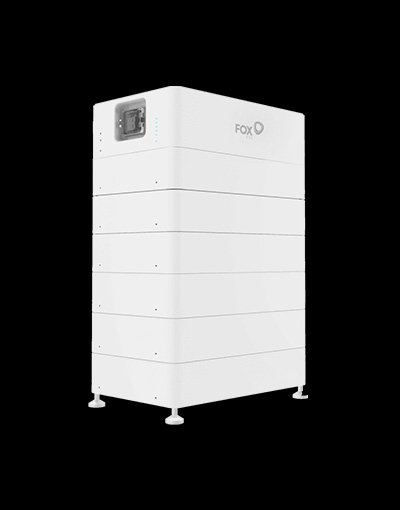
Solar Batteries — Maximise Your Energy & Savings
Integrating a solar battery with your PV system allows you to store energy for later use, lowering grid reliance and increasing self-sufficiency.
Best ways to use solar panels
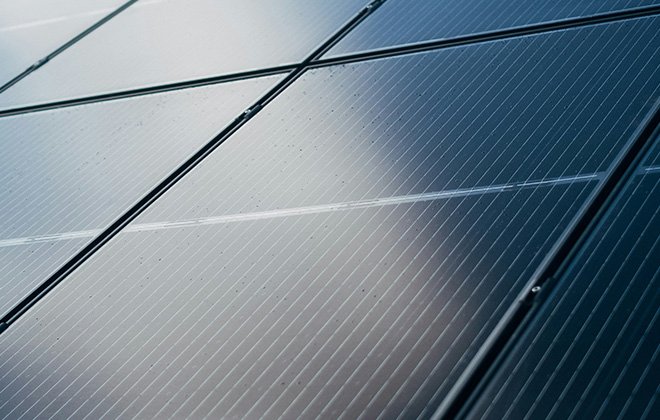
Solar Panels & Batteries
Store energy for nighttime use and charge EVs.
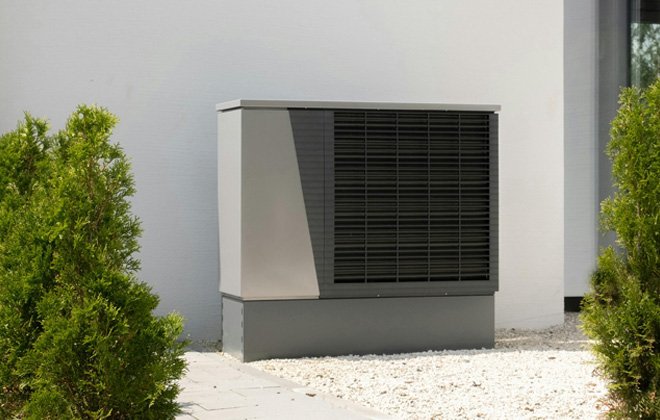
Solar Panels & Heat Pumps
Power heat pumps with solar energy to heat your property efficiently.
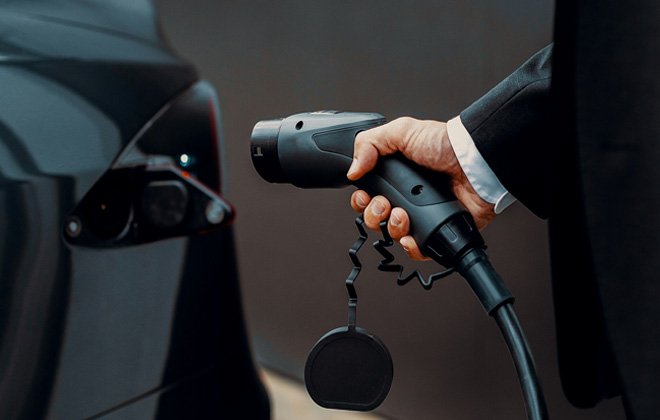
Solar & EV Charging
Directly charge EVs from your solar system, especially with battery storage.
Trusted by industry leaders









How UK-Solar Panels Are Installed
HOW IT WORKS
Our qualified engineers connect the solar panels, inverters, and battery systems while complying with UK wiring regulations (BS 7671). Every installation includes thorough testing, commissioning, and handover with all warranties and documentation.
01 - Free Site Survey
02 - Bespoke Design
03 - Professional Installation
04 - Testing & Handover
05 - Aftercare Support
Ready to start your project?
Tell us about your home and your vision to get started. We'll use your details to prepare a fast, initial estimate tailored to your transformation goals - zero commitment required.
Learn moreTrusted by UK Customers & Rated Highly for Service
The team installed our solar and battery system perfectly. Clear communication and a hassle-free process.
Mark L.
UK Solar made the process seamless. From the survey to installation, everything was professional, efficient, and high-quality. I’m saving money on my energy bills already!
Jane M.
Totally recommend UK-Solar — from quote to install, the team were professional and helpful.
Jack B.
I would definitely recommend UK Solar if you are looking for a Solar + Battery Installation at your home or business. They were the best on price by far and offered a great service from start to finish. The engineers were all polite, friendly and hard working.
Sarah G.
Always a great personal and professional experience. UK Solar is knowledgeable and friendly in every aspect of the job from quotation to completion.
Robert D.
We looked around at various companies before using naked and we are very happy we chose them.
Miranda D.
FAQs
Did you know…the Sun provides the Earth with more energy in a single hour than the whole world consumes in a year. All we have to do is collect it. If every roof space in the UK had solar panels linked to battery storage, we’d have enough energy to power everything we do, everywhere we do it.
We think knowledge is power, so we’ve started building a database of all the things you need to know to make good decisions about your energy future.
We think knowledge is power, so we’ve started building a database of all the things you need to know to make good decisions about your energy future.
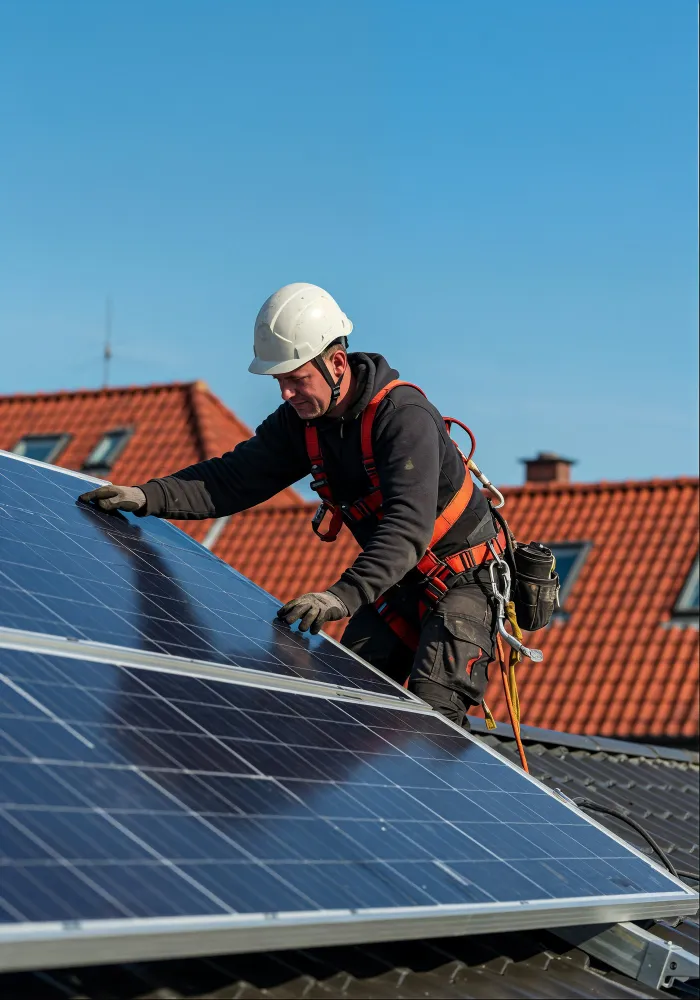
What is Solar PV?
PV stands for Photo (light) Voltaic (Electric). Solar PV panels convert light in to electricity. Note the word light, not sunlight. They continue to produce electricity on cloudy days. It’s just that their output will be higher, the brighter the light is. This is not new technology – the use of light to produce electricity dates back to the 19th Century.
Can solar panels be installed on a flat roof?
Yes, solar panels can be installed on a flat roof. Special mounting systems are used to position the panels at the optimal angle to capture sunlight, ensuring maximum efficiency and energy production.
Do solar panels work all year round?
Yes, solar panels work all year round. While their efficiency is higher in sunny conditions, they can still generate electricity on cloudy days and during winter months. Advances in solar technology ensure that panels continue to produce energy even in less-than-ideal weather conditions.
Can I add batteries later?
Yes, you can add a battery storage system to your solar panel setup. This is a fantastic way to maximize the benefits of your solar panels By storing excess energy generated by your solar panels, you can use it later when needed, enhancing your energy efficiency and independence.
Do I need planning permission?
In many cases, solar panel installations on residential properties do not require planning permission, especially if the panels are installed flush with the roof. However, if you live in a conservation area, a listed building, or plan to install a ground-mounted system, you might need to seek permission. It’s always best to check with your local planning authority to ensure compliance with any regulations.
How much space do I need?
To determine if you have enough space for solar panels, consider the size and layout of your roof or the available ground area. Solar panels require a clear, unobstructed surface to capture sunlight effectively. Generally, a typical residential solar panel system requires about 200 to 400 square feet of roof space. Additionally, ground-mounted systems can be an alternative if your roof space is limited.
How do I know you’re selling me the right system?
Our solar team have absolutely zero financial motivation to push particular products because their salaries are not commission based. We’re committed to remaining 100% impartial and can install any Solar PV products on the market. And frequently do – because every home and every business is different.
What does an inverter do?
Inverters change the DC current from the panels to AC current needed for your home and the grid. It’s essential the correct type of inverter is used and that they’re located in the right place. Many installers always put them in the loft, but this can be detrimental to your system. Naked Solar are meticulous about inverter choice and placement.
How much will I save on my bill?
UK Solar use software to accurately calculate your expected output. The software accurately takes in to account panel performance, inverter performance, shading, roof pitch, roof orientation and your local weather data to calculate how much electric you will generate. We then include these figures and how much money you are likely to earn, based on your usual usage and the amount that will be returned to the grid.
What happens when there’s not enough light?
You will simply draw from the grid in the normal way. But remember, it doesn’t have to be sunny to generate electricity.
What happens if my PV Solar Panels are producing more than I’m using?
The excess energy will be sold back to the grid.
How long do panels last?
Solar PV panels gradually degrade over time. Typically they will lose around 15% of their power over 25 years with some high quality panels only degrading around 2.5% over 25 years. This also varies depending on the quality of the panel. Naked Solar use PV Sol software which allows us to forecast very accurately the impact of any degradation.
Ready to Go Solar?
Get Your Free, No-Obligation Solar Quote
Pop your details in below and our local solar specialist will give you a quick call.
We'll discuss your property, energy usage, and goals, then provide a clear, no-pressure quote based on real installations across Hampshire and nearby areas.
🔒 Your details are secure and will only be used to contact you about your solar enquiry.